
01
Goods-in, put-away and picking
Pallet labels, location labels and case labels in the same shift — often the same minute. The operator wears gloves, works at reach-truck height, and cannot walk back to a terminal to correct a mis-scan.
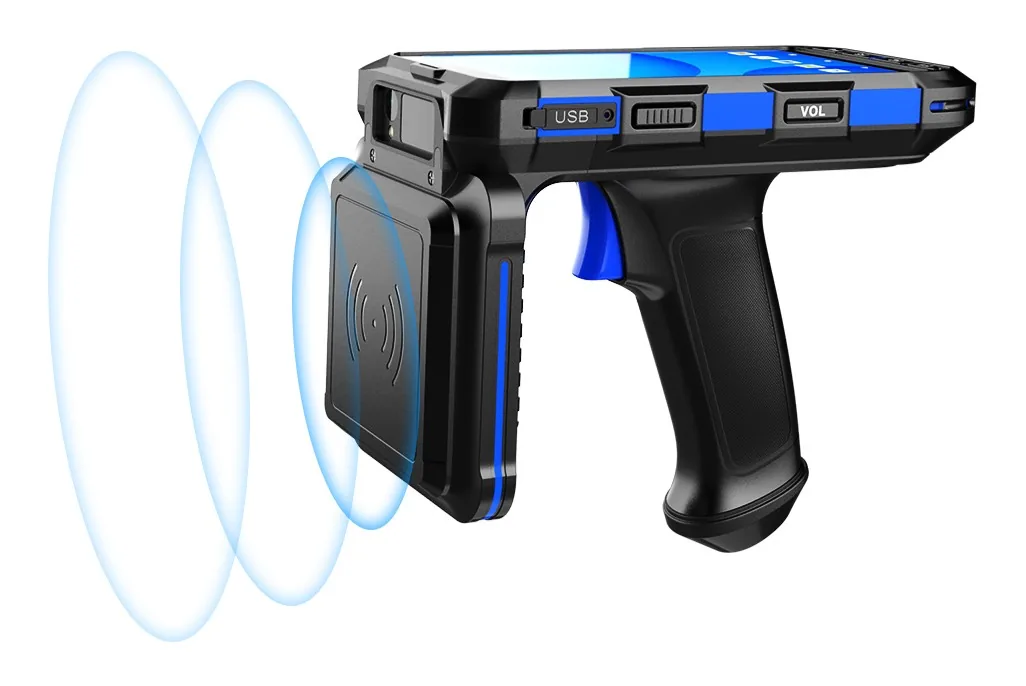
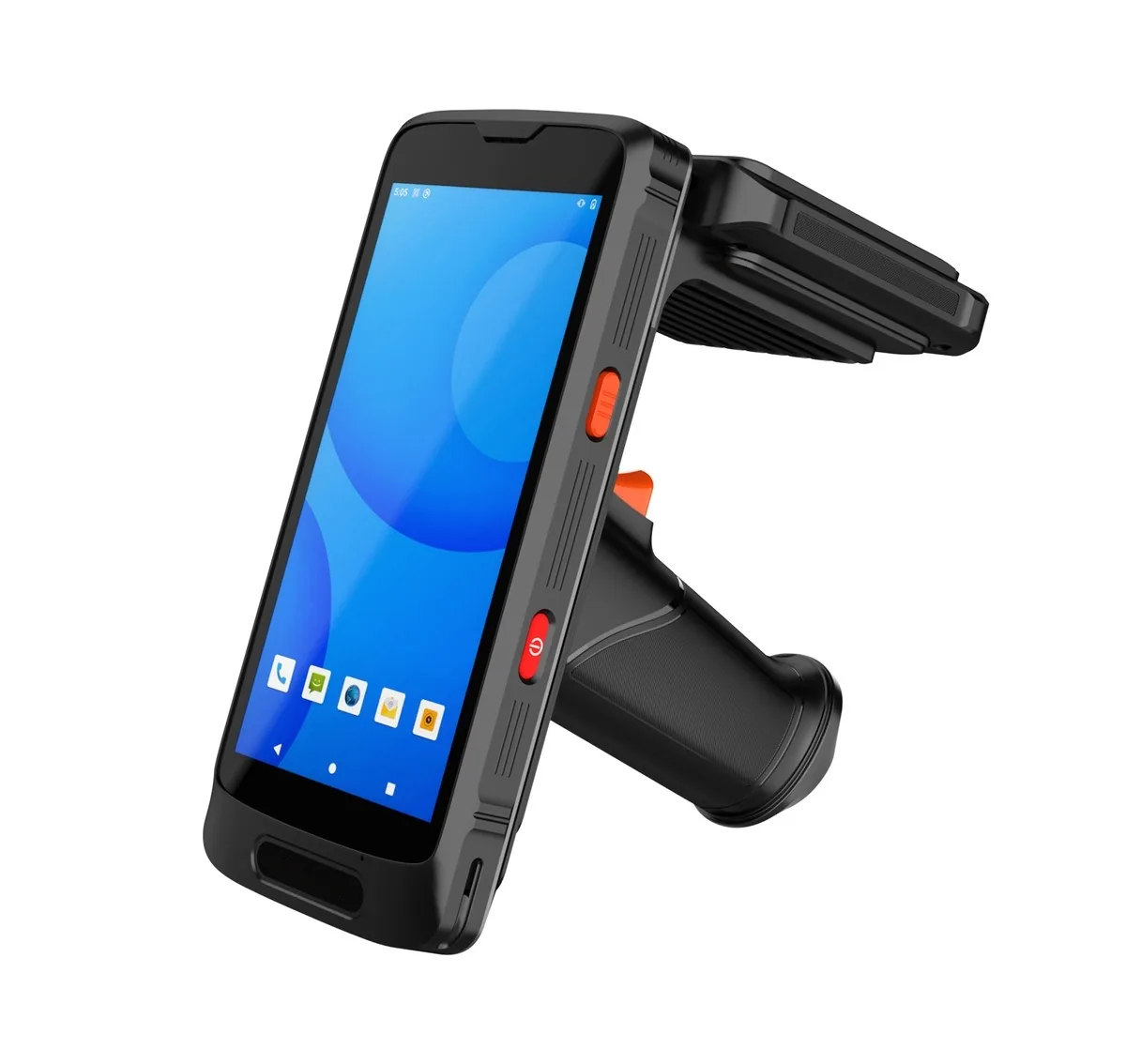
UHF Bluetooth reader, compact
UHF Bluetooth reader, compact · IP65.
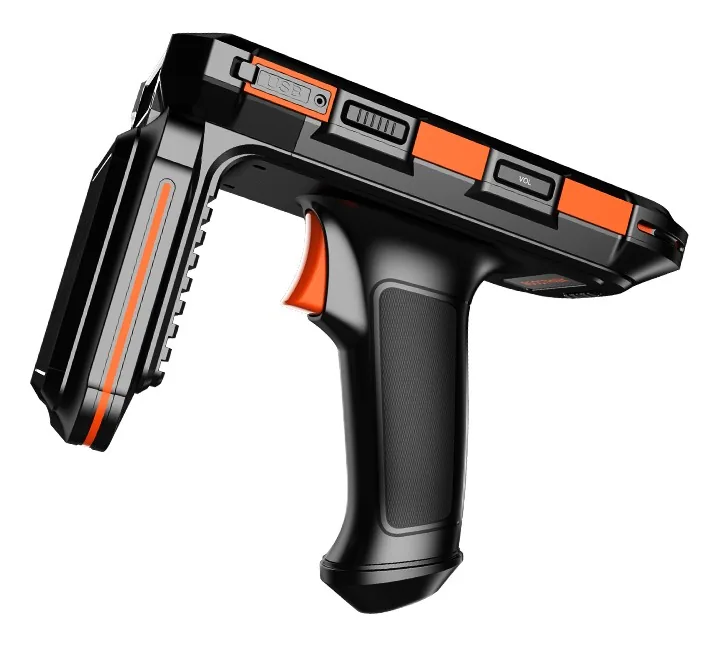
UNIT PHOTOS — the exact build you order is photographed before it ships.
Quoted with cradle, bracket and spare pack — not after the first breakage.
Chassis, weight, pack and panel — the four numbers that decide whether a crew keeps the device in a hand or a holster all shift. Slim & light
Keyboard-wedge, intent or SDK output — your app decides.
Sealed against dust and water on the floor, not just in a lab.
Windows, Android or Linux build — confirmed against your app before dispatch.
Field-swappable packs and dock charging keep a shift running.
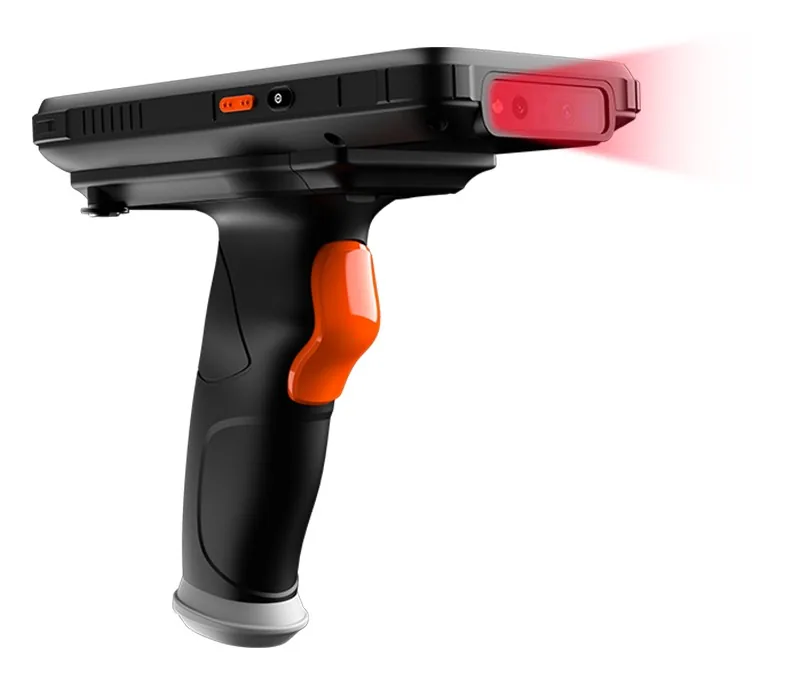
An RFID reader exists because a barcode needs a line of sight and a pallet of 60 cartons does not have one. The form factor follows the job: a pistol grip for racking at 8 m, a slim handheld where the operator also scans barcodes, and a Bluetooth puck that turns a phone or tablet the site already owns into a reader for the price of a reader.
01
Pallet labels, location labels and case labels in the same shift — often the same minute. The operator wears gloves, works at reach-truck height, and cannot walk back to a terminal to correct a mis-scan.
02
Associates scan shelf-edge labels and price tags, count stock in a back room with no signal, and take payment at a pop-up counter. The device is picked up and put down hundreds of times a shift.
03
The terminal is bolted where the work happens: work-order scan at the station, torque-tool data over RS232, a photo of the defect attached to the order. Coolant, swarf and vibration are the design constraints.
ETSI EN 302 208 — 865–868 MHz, 4 channels, ≤2 W ERP.
FCC Part 15 — 902–928 MHz, frequency-hopping, up to 4 W EIRP.
ANATEL — 902–907.5 / 915–928 MHz; homologation is the importer's duty, we supply the test report.
920–925 MHz (and 840–845); the 920–925 plan matches the default SKUs.
WPC — 865–867 MHz narrow plan; variant SKU required.
923–925 / 916.7–920.9 / 917–920.8 — specify at order so the RF front-end matches.
Bands listed are the default SKUs for each market — final frequency/certification confirmation against the local operator is part of the quotation.
Each programme started with a workflow that was losing time. The device changed; the software did not.
10 M parcels / day
Parcel & logistics
Sortation reads at belt speed; no manual re-scan when a label is creased.
Pistol-grip UHF reader + vehicle terminal on the tug
1,800 spindles
Production & MES
Spindle-level traceability replaces paper travellers on the spinning line.
Rugged tablet at the line + UHF handheld for the doff round
1,200 enrolments / day
Identity
Card, fingerprint and face captured at one counter, offline when the link drops.
Multimodal terminal with ID reader and TCS1 print sensorRead this against your own client before the sample ships — it is the list that decides whether the device works on day one or on the third firmware build.
Every figure below is the parameter set for the BR-A8. Options and firmware vary by production batch — confirm the exact configuration when ordering.
The models below run the same firmware branch but take a different accessory set. Ask for a side-by-side sheet if the choice comes down to screen size, scan range or OS.
Stock, configuration, software compatibility and what happens when a unit fails. The answer comes from the person who configured it.
All questionsShips with the accessory list and the configuration you specify. Tell us the app and we will pre-test it before dispatch.